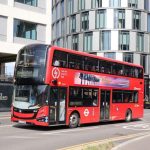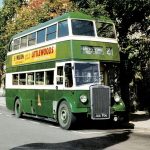




Recently appointed New Vehicles Director at National Express Richard Ball discusses the operator’s ongoing zero-emission work within UK coach and bus
Richard Ball took up his position as New Vehicles Director for National Express in June, in what is no doubt a seismic time for vehicle technology and the industry.
Richard, whose most recent role was Deputy Engineering Director for UK Bus and Coach, has worked for National Express his entire career. He will celebrate his 40th anniversary this year. He has already provided guidance on the introduction of zero-emission vehicles into the bus side of the business, led the engineering response to COVID-19 and managed new vehicle development in coach, drafting vehicle specification and overseeing the build through to delivery of the Caetano Levante II, Levante III and Boa Vista double-decker.
In his new role Richard takes the helm of National Express’ zero-emission vehicle programme. That will involve securing funding, developing commercial and procurement plans, and driving the decarbonisation agenda, due to be realised in part in 2030.
‘Steam to diesel’ moment
Nothing is going to deliver a bigger change for the industry, he believes. An analogy Richard often falls back on is the transition from steam towards diesel in the rail industry. “This, for our coach and bus industry, is our steam-to-diesel moment,” he says. “I’ve come from fixing buses when I first started as an apprentice to Deputy Engineering Director for National Express’ coach division. I know my spanners – and the one thing I see in this job, that I haven’t seen anywhere else, is that nothing is going to make such a big change in our industry than the current decarbonisation agenda. And I don’t think we will see – at least in my lifetime – another change like this.”
That change is what attracted Richard to the role. He reflects back to his earliest days with the industry, beginning in 1981 as a PSV electrician apprentice, and on the changes that he has seen over 40 years with National Express: “The garages were very different places then. Vehicles were very different. Engine emissions were visible. The cleanliness of the emissions from vehicles has changed not just measurably but visibly over my period of time in the business.”
Richard is now building on that work, focusing on successfully implementing zero-emission and low-emission vehicles across National Express operations. “What I’m trying to do is bring my background and expertise to the role and try and help the operating divisions wherever they are,” he says. “Whether that’s buying vehicles, looking for infrastructure, or tying the two together – that’s the bit that I’m intending to bring to this party.”
Nothing is going to make
such a big change in our industry
than the current decarbonisation
agenda. And I don’t think we
will see – at least in my lifetime –
another change like this
The work, for now, is centred on the UK, but will expand globally when travel restrictions ease. The current focus on the UK has shone a spotlight on work in Birmingham within the National Express bus division. Two major projects include the ongoing development of a zero-emission double-decker fleet in Coventry – part of the Coventry All-Electric Bus City – and the second stage of an ongoing bid for the Zero-Emission Bus Regional Areas (ZEBRA) scheme, in which work with the West Midlands Combined Authority (WMCA) is looking to secure further hydrogen fuel cell-electric vehicles and associated infrastructure in Birmingham.

Getting the basics right
In these early stages of the project, understanding simple elements that – according to Richard – can often cause the unsuspecting to “trip up” is essential. Careful conversations with potential suppliers about timescales for delivery, training, and business continuity are guiding the transition from the existing diesel fleet to an electric fleet – and will prove particularly important when, during that transition, there will come a point where two different solutions are being managed at once.
“There will be no magic switch off date where you jump from one technology to another,” Richard points out. “You have to manage that ebb and flow between diesel and electric as part of the process.” Because of the number of stakeholders involved in such a process, from suppliers, garage teams and the local authority, Richard’s role is also to “put an arm of understanding” around each of them.
There are other challenges of course, including diesel depots without an incoming electricity supply big enough to accommodate an electric vehicle charging solution. Incoming supply is the first challenge. The second will be connecting those chargers up, followed by depot parking plans. “We’re already looking at how we will park the vehicles, how the chargers will be connected and making sure simple things like access routes through the depots will still be free,” Richard says, pointing out that while it would be easy to put charging cables across walkways, that is not an ideal scenario. “There is a lot of logic behind this, and that has involved talking to the local stakeholders actually doing the job.”
In this early phase of adoption of new technologies, there are opportunities too; when 19 battery-electric buses were put into National Express’ Birmingham fleet and 10 into Coventry in 2020, driver training would become a huge pay off that dovetailed into the operator’s ongoing work on safety. A conversion kit that takes drivers from diesel vehicles to electric, dealing with familiarisation and driving, means that not only has regeneration been maximised, but rates of regeneration have been greater than that which the operator was expecting.
“We get real benefits from proper driver training,” explains Richard. “When the drivers take time to accelerate and decelerate smoothly it enables us to recapture the energy that’s available from the braking system, maximising regeneration. Of course, ultimately, the better and smoother they drive the better for the customers, and the more likely we’re to get modal shift. But there are also reductions are in our electricity costs as well.”
Meanwhile, National Express says it remains “in step” with WMCA to ensure all necessary information is available for progression of the ZEBRA scheme bid. The potential for the Birmingham project is significant – a bid for 224 vehicles which according to Richard will “kickstart the hydrogen demand in Birmingham.” Nowhere else in the world that he knows of has an aspiration for that many hydrogen vehicles.

Hydrogen – where does it fit?
An interesting question at this time is where hydrogen power will fit in with the overall vehicle parc at National Express. Richard expresses confidence that battery-electric and hydrogen fuel cell-electric are complementary technologies, but hydrogen has its obvious uses where battery-electric capacity currently falls short in range. That includes coach travel. “There are going to be times and places where hydrogen is the better solution and times and places where batteries are the better solution,” he says. “But ultimately they’re both electric vehicles. When you’re running them into a city centre, the customers need not know the difference.”
When it comes to coach solutions, National Express continues to look at alternative fuel sources. While the company remains reticent on some matters when it comes to new technology development, it does reveal that current progress is driven by the complexity of vehicle size, weight and range.
“Over the last 10 years the technology that’s been added to coaches has been increasing in weight,” says Richard. “If you look at the unladen weight of a Euro III coach against a Euro IV, Euro V, or Euro VI, in the time of this engine development the unladen weight has been increasing. We’ve been working really hard in the background to make those unladen weight savings in other areas without affecting passenger comfort, safety, and reliability.”
“Finite element analysis” on the internal structure of the coach design has been part of an ongoing development path alongside conversations with vehicle manufacturers to manage the savings between powertrain and unladen weight. “Absolutely we have to be looking at battery-electric and hydrogen fuel cell-electric solutions,” adds Richard. “The challenge is that the technology flows from cars to lorries to coaches, because it’s driven by volume.”
Acknowledging that diesel has had its day is the first step in that commitment to new technology. National Express has already moved its existing fleet to Euro VI and Richard is confident that diesel will not go “any cleaner”; speculation of Euro VII is parried by the operator’s pledge not to buy another diesel bus. “I don’t think it’s a bridge too far to say at some point we will say we will never buy another diesel coach, but we’re not there yet,” adds Richard.
“We have gotten to the cleanest point that we possibly can with existing diesel. We did the very best we could with the technology we had and it would be remiss, I think, to suggest that we could continue to progress diesel much further.
“The only thing I think we have got to think about is that there may be chassis changes required in order to support hydrogen, and we may well look at some of those.”

A solution for today
Perhaps the most exciting thing about conversations on the decarbonisation agenda are that the technologies are no longer a distant solution, but a reality that is happening now. Hydrogen fuel cell-electric vehicles are on site, and delivery processes are ongoing. National Express West Midlands already has 20 hydrogen vehicles in place, through the partnership with Birmingham City Council, and there are more significant changes to come in the following year. “Hydrogen isn’t a long term solution, it’s a reality now,” Richard says.
There are other benefits to speak of too – not only are these vehicles less polluting, but COVID-19 has encouraged new cleaning regimes to deliver superior interior cleanliness, and noise reduction removes yet another kind of pollution. “We’re getting all of these things coming together,” Richard stresses. “Cleaner vehicles from an interior point of view, cleaner vehicles from an exterior point of view, higher specifications. They’re also quieter; what could be better at the moment? We’re going completely in the right direction.”